Drop-In or Booked Slot: Choosing a Format for Group Help
Drop-in or booked slot? Choose a group-help format that suits the task, protects privacy and gives neighbours a clear way to get support.

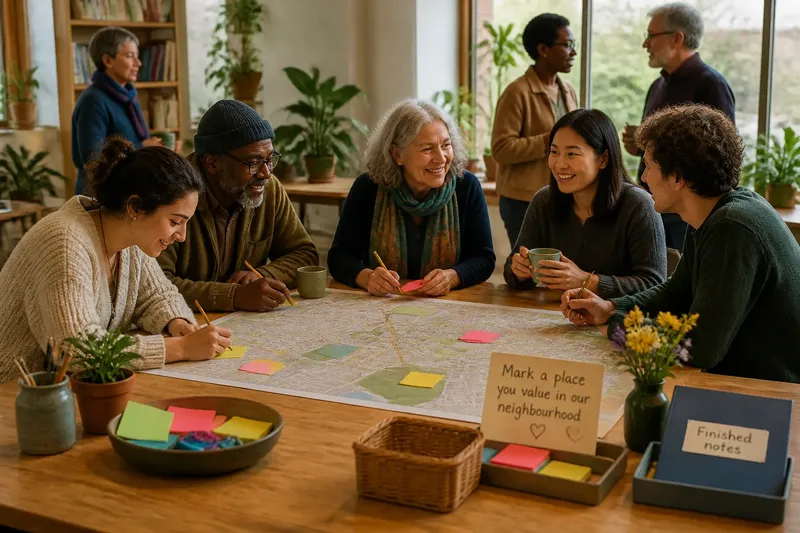
Drop-in or booked slot is the first decision for a neighbourhood group offering help with forms, small repairs or everyday questions. A drop-in allows flexible arrival; booked turns give each person an expected time. Choose according to the task, the room and the support your volunteers can provide.
Before setting a date, write down what the group can help with, what it cannot take on and how visitors will be seen. A clear arrangement helps people judge whether the gathering suits their needs and gives organisers a workable way to manage the session.
Match the format to the help on offer
Start by asking whether a request has a clear beginning and end. Someone who needs help locating a section of a council letter may be able to explain the question, look at the relevant passage with a volunteer and leave with a next action. A booked turn can suit this task when a particular helper is needed or the conversation should happen privately.
Other requests are harder to contain. A visitor may have several connected questions, or may not know what help to ask for until they start talking. A drop-in can provide an easy first contact, if organisers can direct the person to the right helper or explain the group’s limits.
Describe those limits in plain language. For instance, the group might help someone find the relevant part of a form but not complete a legal declaration on their behalf. State the offer on the event notice so visitors can decide whether to come or seek another service.
Balance flexible arrival with a predictable turn
Drop-ins suit people whose schedules are hard to predict. A parent may be free only after the school run; a neighbour working shifts may not know when they can leave work. An open arrival window lets them come when circumstances allow, without requiring an appointment.
That flexibility can mean several people arrive at once. If one volunteer must greet visitors and answer every question, a queue may become difficult to manage. A drop-in works better when helpers can share tasks, explain the order and direct brief queries to the right person.
Booked turns suit focused conversations with a particular helper, such as support using an online council account or finding a local translation service. The agreed time makes arrival easier to plan, but a missed turn may leave a gap, and someone with little schedule flexibility may struggle to attend.
Choose a booking method that visitors can use. A paper sign-up sheet at the library, a text to a named organiser or a call to a community centre may work better than an online form. Offer a route that fits the people likely to attend.
Make the queue and waiting arrangements clear
At a drop-in, visitors may not know how many people are ahead of them. At a booked session, one long conversation can delay later turns. In both formats, uncertainty can make someone leave before they speak to a helper.
Explain whether the group sees people in arrival order, by appointment or according to the kind of question. A paper list with first names or initials can help a small team track turns without announcing private details. Ask visitors what kind of help they need, not for a full account, while others can hear.
Set chairs away from the conversation area where the venue allows it, and keep the route to the room clear. If a delay becomes too long for someone, offer a return time, a later session or another contact route if the group has one. Do not promise an immediate conversation unless the team can provide it.
Protect privacy while keeping help accessible
Neighbours may know one another, which can make asking for practical support easier but discussing personal matters harder. Arrange the room so visitors can ask a basic question without sharing unnecessary details in public.
At a drop-in, a greeter can ask what type of help is needed and offer a quieter place to wait. For booked turns, tell visitors who will be present and whether the conversation will take place in a shared room or a separate space.
Imagine a community-centre group offering help with housing letters. A neighbour arrives without an appointment and does not want to discuss the letter in front of others. The greeter asks only whether the person needs help understanding a document or finding a service, then offers a quiet seat until a helper is free. The result is a choice about how much to disclose before the conversation begins.
If a request is beyond the group’s knowledge, make a calm referral rather than guessing. For legal, financial or health decisions, keep the group’s role general and suggest a qualified professional where needed.
Set fair rules for lateness and walk-ins
For booked turns, decide what happens if someone arrives late or misses their time. They might join the end of the session, use an open turn or arrange another visit. Include the available option in the booking message. A clear, flexible rule helps organisers manage the session without leaving visitors unsure.
For drop-ins, state when the last arrival can be accepted. “Please arrive by the final half-hour” is clearer than listing only the closing time, especially if a conversation may take longer than the remaining session.
Use a booking system the group can maintain. A notebook may suit a small team; a shared calendar can help when several volunteers manage appointments. Record only what is needed to coordinate attendance, and keep names or personal details out of public view.
Use a mixed format for short and longer conversations
A session can combine open arrival with booked turns. A group might reserve some appointments for focused conversations and leave the rest of the session available for brief questions and referrals. Another option is to welcome drop-ins first, then offer a later appointment for requests that need more time.
Make the distinction clear. Explain how booked visitors and walk-ins will be seen, and tell each person what to do on arrival. Say you are organising a neighbourhood session where some people need a quick pointer and others have a bundle of paperwork. You set aside booked turns for longer conversations and keep drop-in time for brief questions; the expected result is that visitors can choose the route that fits their request while helpers can protect time for more involved support.
Which format fits your group-help session?
Is a drop-in suitable for changing schedules?
It can be, because visitors do not need to commit to an exact arrival time. Explain the likely wait and how the group will manage a busy spell.
Do booked slots prevent waiting?
They make arrival more predictable, but a conversation can run long or a helper can be delayed. Tell visitors what to do if the timetable slips.
How can a small group manage the queue fairly?
Choose a simple order, explain it and ask one person to track turns if possible. If a question needs a particular helper, arrange that without asking visitors to share private details in the queue.
Can people without appointments attend a booked session?
Yes, if organisers set aside time for walk-ins and explain how it fits around booked turns. If the group cannot see them that day, offer a clear alternative.
Tell visitors what will happen before they arrive
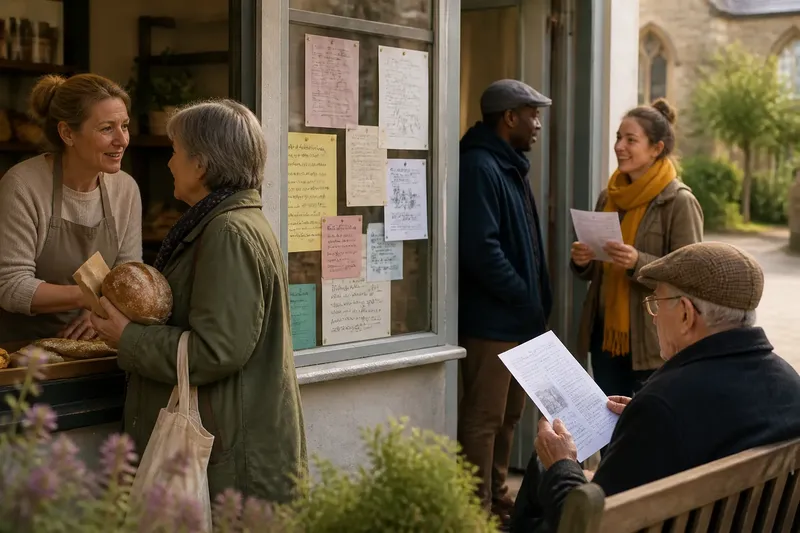
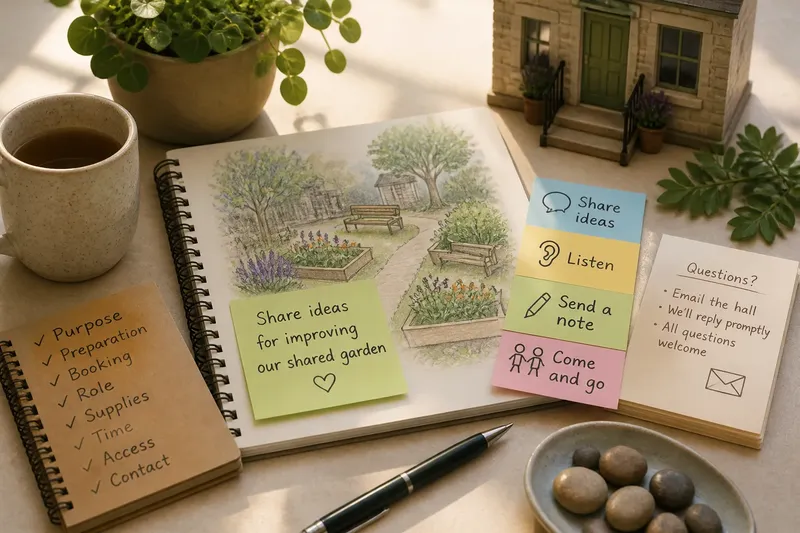
Name the format plainly: “Drop in during the listed opening times” or “Book a turn by contacting the organiser.” Include the type of help available, where to find the room, whether a visitor can bring a support person and what to do if they cannot attend at the arranged time.
- Check whether each request can be handled in a focused conversation; if yes, offer booked turns, and if no, use drop-in time or a referral route.
- Check whether visitors are likely to have changing schedules; if yes, allow flexible arrival, and if no, consider a booking system.
- Check whether one helper can manage arrivals and questions; if yes, explain the queue, and if no, recruit another organiser or limit attendance.
- Check whether conversations may include personal details; if yes, arrange a quieter space, and if no, use the shared room while still avoiding public disclosure.
- Check whether the booking method is accessible to expected visitors; if yes, use it, and if no, provide a phone, text or paper option.
- Check whether a late arrival can still be seen responsibly; if yes, state the available option, and if no, give a later session or referral contact.
After the session, note what organisers observed: a crowded arrival period, unused booked turns or confusion about where to wait. Use those observations to adjust the arrival window, booking route or queue explanation next time. For a group choosing between a drop-in or booked slot, the right format is the one it can explain clearly and run consistently, with a practical alternative for people whose needs do not fit.