A Swap Table for Seeds, Stories and Garden Notes
A swap table for seeds, stories and garden notes helps neighbours share growing advice and find useful supplies, even if they bring nothing to exchange.
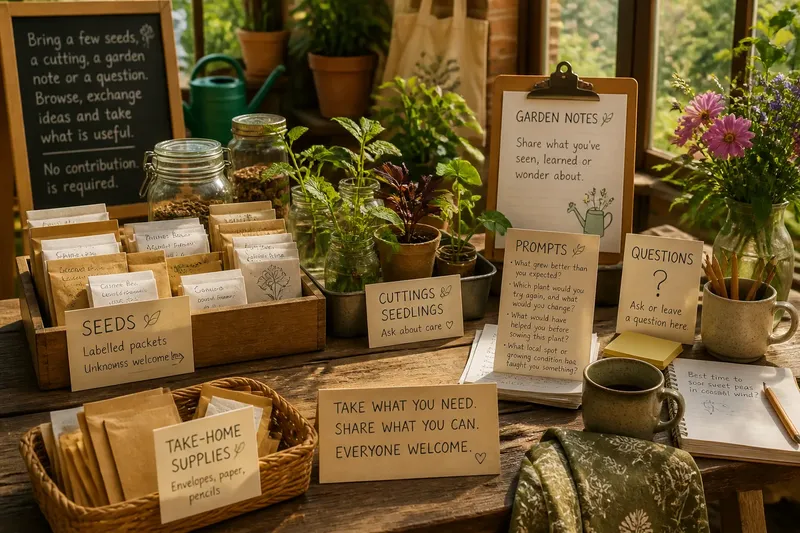
A swap table for seeds, stories and garden notes works best when visitors can see what is available and join without bringing anything. Set it up as a seasonal exchange, not a lesson: give contributions clear places, add a few gentle prompts and let conversation grow around what neighbours bring.
Host it in a communal garden, library room, sheltered courtyard or another place where people can pause. Choose a suitable time, make the exchange easy to understand and welcome gardeners at every level.
Choose a season and a place that suit the exchange
Begin with what is happening in local gardens. A spring gathering might centre on sowing and seedlings; a summer table could focus on watering and edible harvests; an autumn exchange might invite seeds, cuttings and notes on what thrived. In winter, people can share plans, stored seeds and ideas for the coming growing season.
Pick a date when people are likely to be nearby, such as during a community garden open hour or a regular library gathering. Find a spot with a flat surface, space to stand or sit, and shelter if the weather may turn. Check access and booking arrangements with the venue manager.
Keep the gathering open-ended rather than asking everyone to present. Tell people they may bring seeds, a cutting, a useful note, a question or simply themselves. Make clear that bought and saved seeds are welcome, and that taking part does not depend on having something to offer.
Invite contributions without setting a standard
Use a short invitation that explains what will happen and what people can bring. Avoid language suggesting that visitors need expert knowledge, polished labels or a large supply of materials. A handwritten notice at the venue, a neighbourhood group message or a note through a local garden club can all carry the same plain invitation.
For example: “Bring a few seeds, a plant cutting, a garden note or a question. Browse, exchange ideas and take what is useful; no contribution is required.” Add the date, place and a simple description of the setting, such as whether it is indoors or outdoors.
If you expect people to share seeds, ask them to label packets with the plant name and any details they know, such as where the seeds came from or when they were collected. Missing information should not be a barrier. A packet marked “unknown garden flower” can prompt conversation, as long as nobody mistakes uncertainty for reliable growing advice.
Arrange the table in clear, welcoming zones
Use trays, jars, envelopes or shallow boxes to separate contributions. Handwritten signs are easy to adjust. Put self-explanatory items near the front, leaving room for people to stop without blocking others.
- Seeds: Group labelled packets together and leave a separate space for packets with incomplete information.
- Cuttings and seedlings: Set them in a tray or container that catches drips, with a note inviting visitors to ask about care.
- Garden notes: Offer a folder or clipboard for observations, planting reminders and local growing tips.
- Questions: Keep a blank pad for questions people want to share, whether or not they can stay to discuss them.
- Take-home supplies: Put spare envelopes, scrap paper and pencils within easy reach.
Keep the zones distinct but informal. The aim is to help someone understand what is on offer at a glance, not to create a market stall with rules for every object. Leave a clear patch of table for conversation or for contributions that do not fit an existing category.
Use prompts that invite a story, not a lecture
Place a few question cards beside the garden notes. Prompts should be easy to answer from ordinary experience, including a small surprise or an unresolved problem. Try these:
- What grew better than you expected in your garden or window box?
- Which plant would you try again, and what would you change?
- What would have helped you before sowing this plant?
- What local spot or growing condition has taught you something useful?
Keep prompts optional and do not ask everyone to speak in turn. A visitor might read one, write a sentence or respond to someone while browsing. If someone offers advice, invite them to explain the conditions behind it: a sunny balcony, a damp courtyard and a sheltered allotment can call for different choices.
Welcome people and keep the exchange moving
As host, briefly explain the zones and point out that browsing is welcome. Then step aside. A relaxed exchange needs a visible host, but not someone directing every conversation.
Imagine a neighbour arrives with an envelope of marigold seeds but no garden notes. You point out the seed tray and question cards, and say they are welcome to take a packet or simply browse. If another visitor asks about the seeds, the neighbour can share what they remember while leaving unknown details clearly marked as unknown.
Keep an eye on the practical flow. Refill scrap paper if it runs out, move used cups away from the display and make space when a group gathers. If someone brings a plant that needs attention, find it a suitable place rather than letting it crowd the seed packets.
Close the gathering with care for what remains
Before people leave, invite them to take any notes or supplies they need and explain what will happen to unclaimed items. Return borrowed trays and furniture to their proper place. Offer leftover seeds or cuttings to a community garden or another local growing space only if someone there has agreed to receive them. Otherwise, take them home or dispose of them responsibly.
Gather written notes into one folder if contributors are happy for them to remain available. Keep personal contact details off the shared table unless someone has chosen to provide them for that purpose. A brief thank-you through the same local channel as the invitation can say whether another seasonal exchange is planned.
What should a seed packet say, and how can visitors join?
What details are useful on a shared seed packet?
Write the plant name if known, plus any information the giver can confidently provide, such as the source or collection season. Mark uncertain details plainly rather than guessing.
Can people take seeds without bringing any?
Yes. Say so in the invitation and, if useful, on a small table sign. The exchange should welcome curiosity as well as contributions.
How can a host make the table useful to beginners?
Use plain labels, spare envelopes and prompts that invite questions. Experienced gardeners can describe what worked for them without presenting local conditions as universal.
What if nobody has much to exchange?
Keep the gathering centred on notes and conversation as well as seeds. Shared observations can give people a reason to return, even when the table is lightly stocked.
A swap table for seeds, stories and garden notes is easier to repeat when you record which signs were clear, which prompts drew a response and where the table felt crowded. Use those observations to adjust the next seasonal gathering, while leaving room for neighbours to shape the exchange themselves.